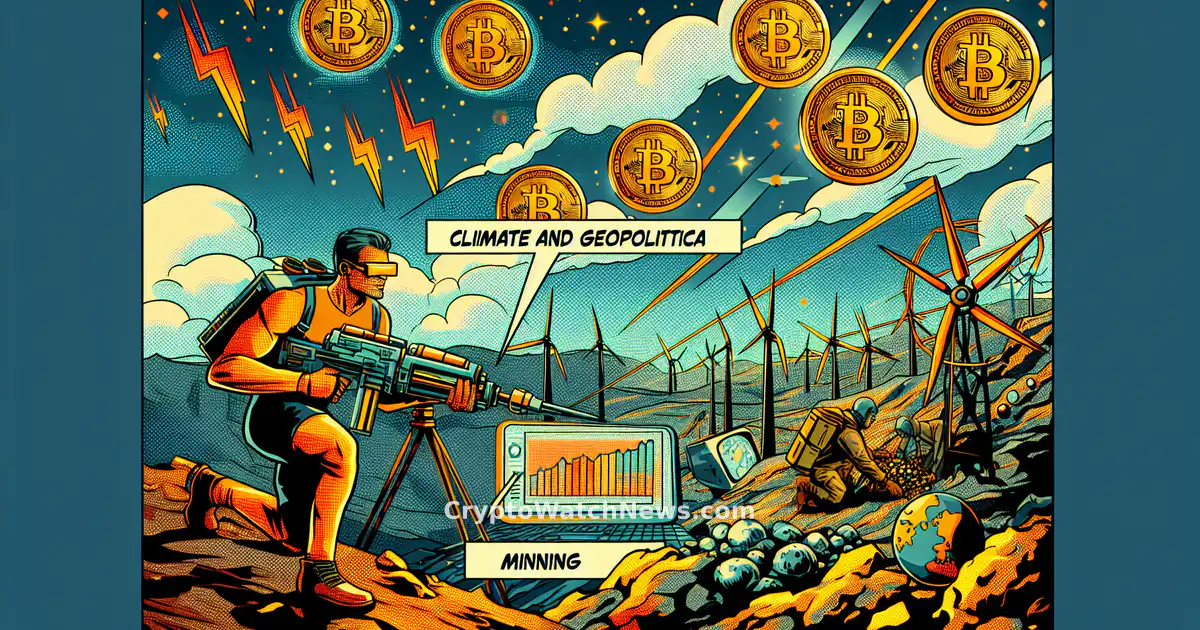
Impact of Extreme Weather on Bitcoin Mining
Bitcoin mining, a crucial component of the digital asset landscape, is increasingly confronting challenges from climate volatility and geopolitical forces. The sector's energy consumption parallels that of mid-sized nations, necessitating resilience against severe weather events and political tensions to maintain investor confidence. Recent winter storms in the U.S.—a key player in the global mining scene—have caused significant disruptions, cutting the hashrate by 40% due to increased grid pressure. This highlighted not just the vulnerabilities but also potential adaptive strategies within Bitcoin infrastructure.
Market Analysis: BTC
Market Insights
The current market data indicates a significant downward trend, with the price experiencing a 6.59% decline over the past 24 hours and a 12.69% decrease over the past week. This suggests heightened volatility and potential bearish sentiment among investors. The substantial 24-hour trading volume of $74,465.01 million, coupled with a market cap of $1,556.58 billion, reflects active market participation, possibly driven by uncertainty or negative sentiment in the market.
Adaptive Strategies Amid Grid Strains
Despite adverse conditions during these extreme weather events, some U.S. miners have found ways to adapt. By utilizing long-term power purchase agreements (PPAs), these miners engaged in energy arbitrage, selling electricity back to the strained grid at elevated prices, thereby achieving profit margins up to 150% higher than their usual operations. This adaptability underscores Bitcoin mining's potential as a flexible resource for grid stability, easing demand during peak periods and providing a financial buffer against operational setbacks.
Global Diversification Enhancing Sustainability
Globally, Bitcoin miners are increasingly shifting towards diversified energy sources to hedge against geopolitical risks and foster sustainable practices. In Europe, initiatives like the REPowerEU plan are integrating mining operations with renewable projects to reduce dependency on fossil fuels post-Russia-Ukraine conflict. Similarly, Asia is making strides towards renewables with considerable portions of mining powered by non-fossil sources by 2025. These movements align with environmental investment goals while enhancing resilience amidst regional political dynamics.
Energy Innovations Fueling African Economies
In Africa, innovative approaches are leveraging Bitcoin mining as a catalyst for energy development and community empowerment. Projects such as Virunga Energies in Congo utilize hydropower to fund local infrastructures while generating community revenue through cryptocurrency activities. These efforts not only highlight how underutilized resources can be activated for economic growth but also illustrate how emerging markets can harness technological shifts for broader societal benefits.
Sanctions on Iran-linked Crypto Exchanges Transform Compliance Landscape
Sanctions Propel Regulatory Evolution
The U.S. Treasury's intensified sanctions on Iran-linked cryptocurrency exchanges mark a pivotal shift in global compliance standards within the digital asset sector. Over recent years, these measures have illuminated gaps within crypto ecosystems while propelling regulatory innovations aimed at curbing illicit financial activities. As Iran increasingly uses cryptocurrencies to bypass conventional financial restrictions for military procurement, this regulatory tightening also redefines economic and geopolitical interactions across borders.
Complexities in Global Regulatory Frameworks
These sanctions highlight divergent regulatory approaches between major powers; where the U.S.'s focus on clarity and innovation contrasts sharply with Europe's risk-adverse stance embodied in its MiCAR framework. Consequently, virtual asset service providers (VASPs) face intricate compliance landscapes as they navigate cross-border legalities exacerbated by OFAC's stringent treatment of crypto assets equivalent to fiat currencies. This discrepancy in regulatory fervor underscores challenges facing platforms operating globally amidst varying jurisdictional protocols.
Compliance Technology Drives Market Adaptation
Amid rising illicit activity linked to Iranian networks via blockchain transactions, investment in compliance technology is surging. Firms focusing on wallet blacklisting or real-time transaction monitoring find themselves at the forefront of essential market solutions that enable tracking IRGC-linked fund flows across decentralized platforms like TRONTRX-- and EthereumETH--. Despite providing lucrative opportunities amid rising regulation costs, entities must balance expanding technological capabilities under intense scrutiny and enforcement pressures globally.
Navigating Geopolitical Financial Shifts
Looking forward, interplay between innovation-driven regulations from the U.S., countered by EU’s cautious frameworks will heavily influence future compliance landscapes worldwide amidst escalating sanctions enforcement campaigns targeting shadow banking systems pivotal within sanctioned regimes’ financial operations network complexity complicates fidelity assurance yet presents opportunities for agile firms adeptly navigating socio-economic transformations shaping today’s digital finance ecosystem dynamics amid geopolitically charged contexts unfolding rapidly around us.
Conclusion
The intersection of climate volatility and geopolitical dynamics presents a formidable challenge for Bitcoin mining, yet it also unveils opportunities for innovation and resilience. The recent disruptions caused by extreme weather underscore the sector's vulnerability but also highlight the potential for adaptive strategies, such as energy arbitrage, to bolster both profitability and grid stability. As Bitcoin miners increasingly diversify their energy sources, the industry could emerge as a pivotal player in the transition towards sustainable energy practices. For investors, the current market volatility and price declines signal a time of caution, yet they also present potential entry points for those with a long-term perspective. The ongoing developments in mining infrastructure and energy strategies may not only mitigate risks but also enhance the overall sustainability and appeal of Bitcoin. Looking ahead, the ability of miners to adapt and innovate will be crucial in shaping the future landscape of cryptocurrency investment.